
Ranthambore: A Hidden Birdwatcher’s Paradise
While Ranthambore is globally famous for its Royal Bengal Tigers, what many visitors don’t realize is that the park harbors over 300 species of birds, making it one of Rajasthan’s premier birdwatching destinations. From majestic raptors soaring above the ancient fort to tiny iridescent kingfishers darting over lakes, Ranthambore’s avian diversity is staggering.
1. Indian Eagle Owl (Bubo bengalensis)
The undisputed king of Ranthambore’s bird world. This magnificent owl, with its distinctive ear tufts and piercing orange eyes, is often spotted in the rocky outcrops near the Ranthambore Fort. Active primarily at dawn and dusk, the Eagle Owl’s deep hooting call echoes through the forest valleys. Best spotted in Zones 2 and 4 near cliff faces.
2. Indian Grey Hornbill
With its distinctive curved bill and loud cackling call, the Indian Grey Hornbill is a common but always delightful sighting. Found in pairs or small family groups in the deciduous forest canopy. They play a crucial role as seed dispersers. Listen for their “kuk-kuk-kuk” calls in Zones 1, 3, and 5.
3. Painted Stork
These large, colorful wading birds with their distinctive pink and orange plumage are a stunning sight at Ranthambore’s lakes. Large colonies nest at Padam Talao and Rajbagh Lake, creating spectacular displays from November to March. Best photographed from Zone 3 where they feed in shallow waters.
4. Common Kingfisher
A flash of electric blue and orange — the Common Kingfisher is a photographer’s dream. These tiny torpedo-shaped birds dive at incredible speed to catch fish. Found near every water body in the park, but best spotted at Malik Talao (Zone 5) and Rajbagh Lake (Zone 3).
5. Crested Serpent Eagle
This magnificent raptor with its prominent crest and broad wings is often seen soaring on thermal currents above the forest canopy. As the name suggests, it primarily feeds on snakes. Its piercing “kee-kee-kee” call is one of the most recognizable sounds in Ranthambore. Commonly spotted in all zones.
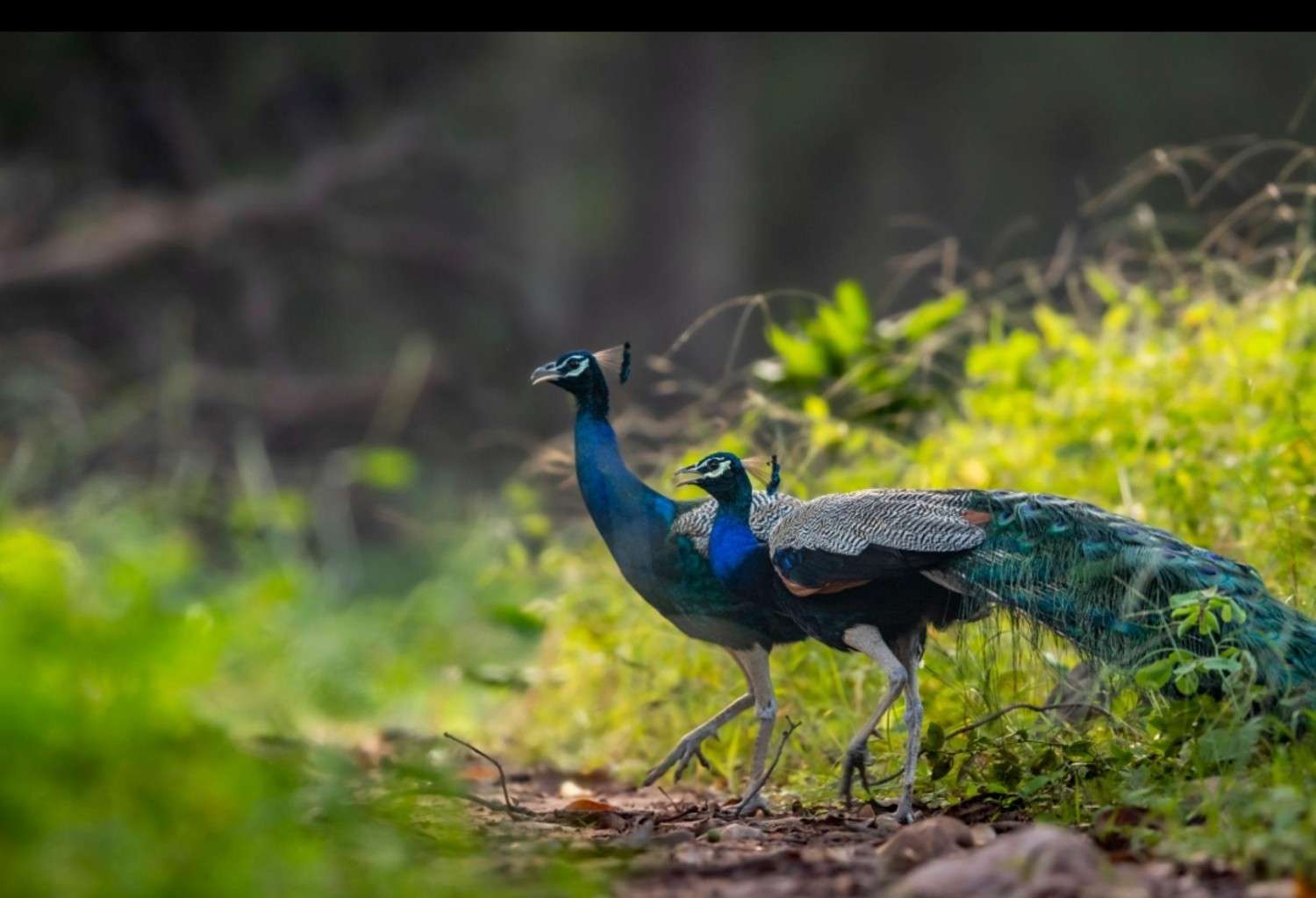
6. Indian Peafowl (National Bird)
India’s national bird is abundant in Ranthambore. During monsoon and early winter, males display their spectacular tail feathers in a mesmerizing dance. Their alarm calls are also one of the key indicators of tiger presence — a peacock’s urgent “mayaw” cry often means a predator is nearby.
7. White-breasted Kingfisher
Larger than its Common cousin, the White-breasted Kingfisher is known for its brilliant blue plumage and chocolate brown head. Unlike other kingfishers, it doesn’t always need water — it’s often spotted perched on dry branches, hunting insects and small lizards.
8. Indian Vulture (Critically Endangered)
Ranthambore is one of the few remaining strongholds of the critically endangered Indian Vulture. Nesting colonies can be seen on cliff faces near the fort. Conservation efforts in the park have helped stabilize their numbers. Spotting this rare bird is a privilege few wildlife enthusiasts experience.
9. Bonelli’s Eagle
A powerful and agile raptor, Bonelli’s Eagle is a winter visitor to Ranthambore. Often seen hunting pigeons and small mammals at high speed. The rocky terrain around the fort provides perfect nesting sites. Best spotted from Zone 4 lookout points.
10. Great Indian Horned Owl
One of the largest owls in Asia, the Great Indian Horned Owl is a rare but spectacular find. Its massive ear tufts and deep hooting call distinguish it from the Indian Eagle Owl. Found in dense forest areas, particularly near ancient banyan trees. Zone 5 and Zone 1 are known habitats.
11–15: More Must-See Species
11. Indian Roller — The “Blue Jay of India” with its stunning turquoise wings. 12. Spotted Owlet — A small, adorable owl commonly seen peering from tree hollows. 13. Asian Paradise Flycatcher — Males have extraordinarily long white tail streamers. 14. Sarus Crane — The world’s tallest flying bird, occasionally spotted near wetlands. 15. Brown Fish Owl — A large nocturnal hunter found near streams and lakes.
Best Birdwatching Zones
Zone 3 (Rajbagh Lake): Best for water birds — storks, kingfishers, cormorants. Zone 4 (Fort area): Best for raptors — eagles, owls, vultures. Zone 5 (Malik Talao): Best for mixed species — kingfishers, herons, warblers. Buffer Zones 6-10: Excellent for grassland species and winter migrants.
Pro Tip: Carry a pair of binoculars (8×42 or 10×42 recommended) and a bird field guide. The morning safari offers the best birdwatching opportunities when birds are most active.
Ready to explore Ranthambore’s birdlife? Book your safari and ask for our specialist birdwatching guide!