
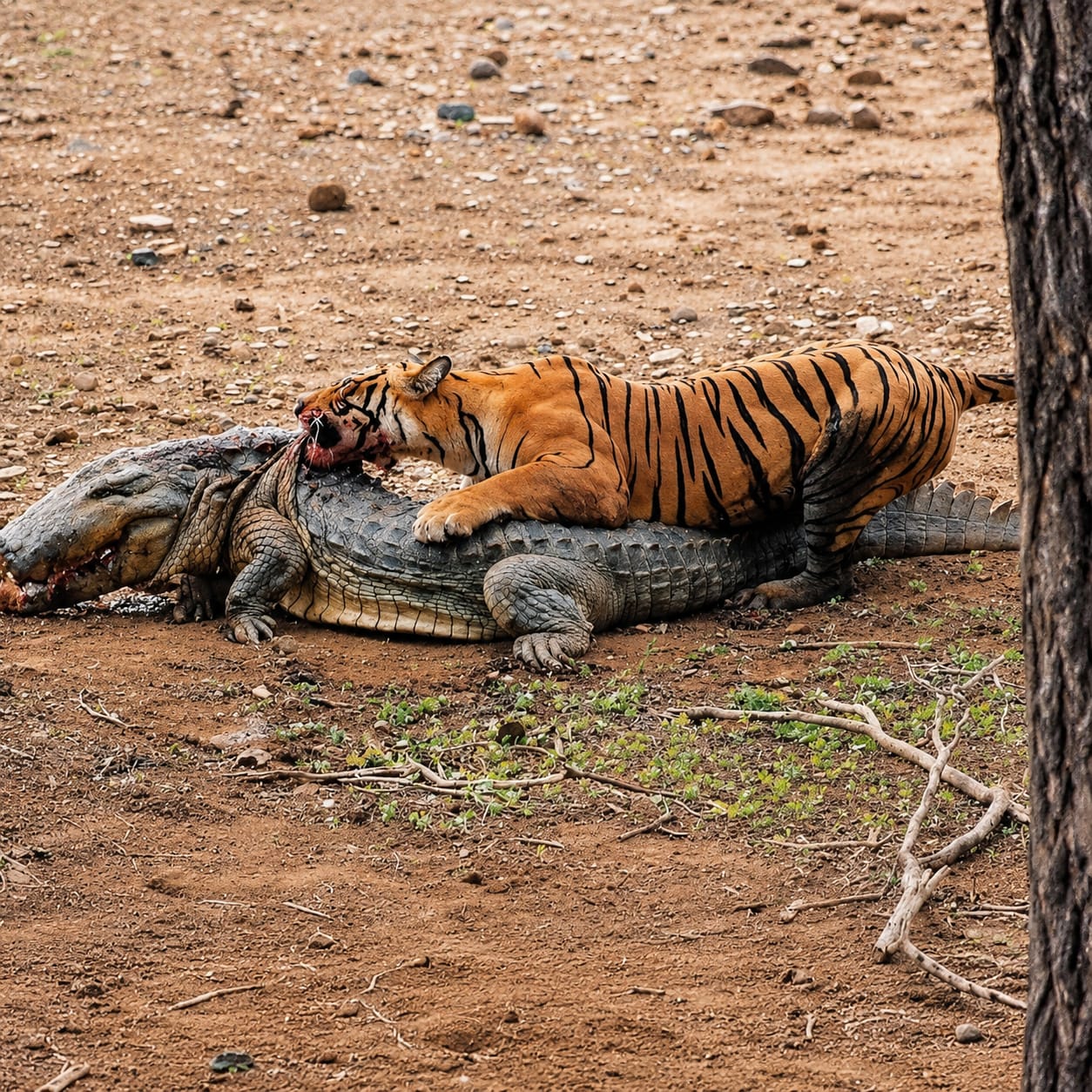
A Tigress Who Became a National Symbol
Few wild animals have ever captured the public imagination quite like Machali. Officially catalogued as T-16 in the Ranthambore tiger registry, this remarkable tigress spent nearly two decades roaming the ravines and lakeshores of one of India’s most celebrated national parks. Her name, derived from the Hindi word for fish owing to a pair of fish-shaped facial markings, became synonymous with Ranthambore itself.
From Cub to Sovereign
Machali first appeared in park records during the late 1990s. Rangers noticed her near the ancient Padam Talao waterbody as a young cub accompanying her mother. Over the following years she demonstrated an unusual self-assurance, gradually asserting control over the premium hunting grounds around Zones 3 and 4 — areas rich in sambar deer, spotted deer, and year-round water sources.
One episode in particular propelled Machali into the international spotlight. Cameras captured her confronting a large mugger crocodile that ventured too close to her offspring. The footage of that encounter spread across wildlife networks worldwide and transformed Machali from a regional attraction into a global wildlife celebrity.
Her Enduring Contribution
Across her lifetime Machali raised multiple litters totalling roughly eleven surviving cubs. Several of these offspring went on to claim their own territories within Ranthambore, effectively seeding the park with her genetics. Economists have estimated that the tourism drawn by Machali’s fame channelled hundreds of crores in revenue to the surrounding region.
Beyond economics, her presence motivated documentary crews from the BBC, National Geographic, and several Indian production houses to invest years in filming Ranthambore’s wildlife — output that continues to inspire conservation awareness today. India Post honoured her with a special commemorative stamp, an exceedingly rare tribute for a wild animal.
Farewell to the Matriarch
Machali died in August 2016 at an estimated age of nineteen, far exceeding the typical wild-tiger lifespan. Forest officials conducted a ceremonial send-off attended by villagers and conservationists alike. Today, multiple generations of her descendants — notably her granddaughter Arrowhead — continue to patrol the very same lakeshores where Machali once held court.
“Machali proved that a single animal can reshape an entire region’s relationship with nature. Her story is not just about a tiger — it is about what happens when people choose to protect rather than exploit.”