
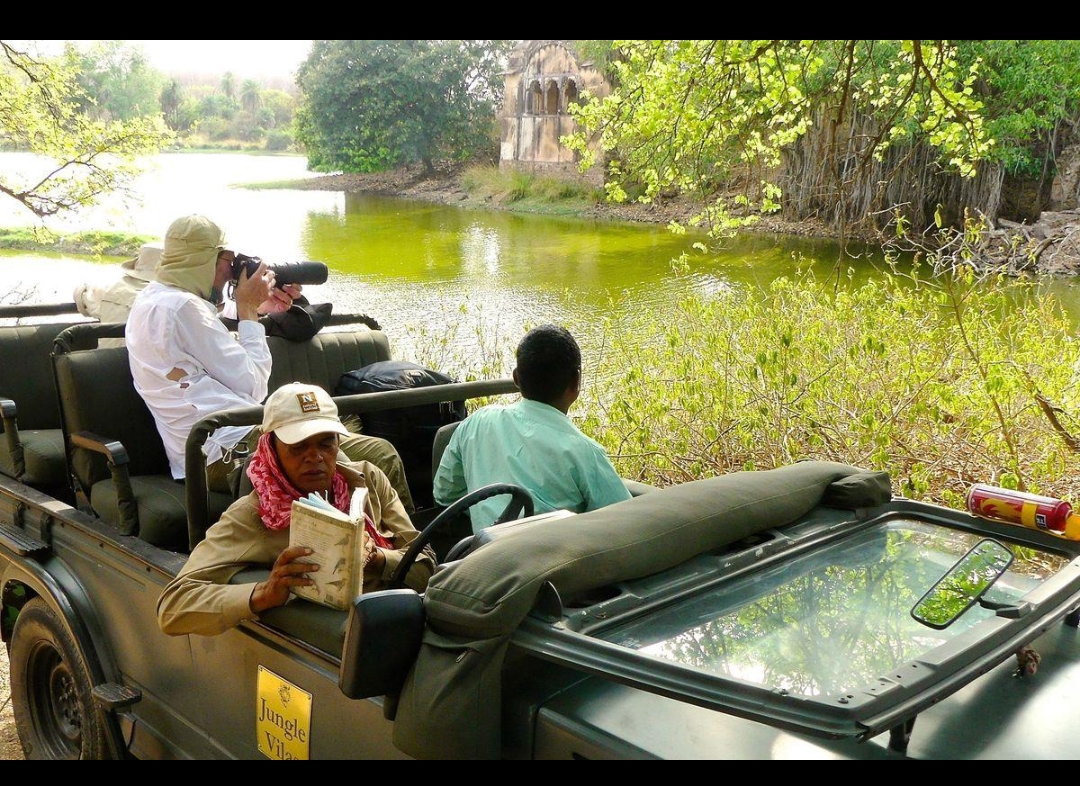
Capturing the Wild: A Photographer’s Guide to Ranthambore
Ranthambore National Park offers some of the best wildlife photography opportunities in Asia. The relatively habituated tigers, dramatic backdrop of the ancient fort, and diverse wildlife create a photographer’s paradise. Whether you’re a beginner with a smartphone or a pro with a 600mm lens, this guide will help you capture stunning images on your safari.
Camera Body Recommendations
Professional: Canon R5/R6, Nikon Z8/Z9, Sony A1/A7R V — full-frame mirrorless cameras with excellent autofocus tracking and high burst rates. Enthusiast: Canon R7/R10, Nikon Z50, Sony A6700 — APS-C crop sensors give you extra reach (1.5-1.6x crop factor). Budget: Any DSLR or mirrorless camera from the last 5 years will work well. Even modern smartphones (iPhone 15 Pro, Samsung S24 Ultra) with their telephoto lenses can capture decent wildlife shots.
Lens Selection: The Most Important Decision
Must-Have: A telephoto zoom lens in the 100-400mm or 200-600mm range. This is the single most important piece of equipment. Animals are often 20-50 meters away, and you need reach to fill the frame. Nice-to-Have: A wide-angle lens (16-35mm) for landscape shots of the fort and forest scenery. Budget Option: Tamron or Sigma 100-400mm lenses offer excellent quality at half the price of brand-name equivalents.
Camera Settings for Tiger Photography
Shutter Speed: Minimum 1/500s for a stationary tiger, 1/1000s or faster for a walking/running tiger. Slow shutter speeds cause motion blur — the biggest mistake beginners make. Aperture: f/5.6 to f/8 for a single animal (sharp subject, blurred background). f/8 to f/11 for group shots or landscapes. ISO: Don’t be afraid of high ISO. Modern cameras handle ISO 3200-6400 beautifully. A sharp photo at ISO 6400 is infinitely better than a blurry one at ISO 400. Mode: Use Aperture Priority (Av/A) with Auto ISO and minimum shutter speed set to 1/500s. This lets you focus on composition while the camera handles exposure.
Autofocus Settings
Use continuous autofocus (AI Servo / AF-C) with animal eye detection if your camera supports it. Select a wide AF area for initial acquisition, then switch to a smaller zone once locked on. For stationary subjects, single-point AF gives the most precise focus on the animal’s eye.
Composition Tips
Eye Level: Get as low as possible in the vehicle for eye-level shots. This creates a more intimate connection with the animal. Rule of Thirds: Place the animal’s eye at the intersection of thirds for dynamic compositions. Leave Space: Give the animal “room to walk into” by leaving space in front of its direction of movement. Include Habitat: Don’t always zoom tight — wider shots showing the tiger in its forest or lake environment tell a more compelling story.
Best Photography Times
The golden hour (6:30-8:00 AM) provides the most beautiful warm light. The hour after sunrise creates long shadows and a golden glow that makes any wildlife photo stunning. Afternoon safaris between 4:00-5:30 PM offer similarly warm light. Midday light (11 AM–2 PM) is harsh and unflattering — but you won’t be in the park during those hours anyway!
Practical Safari Photography Tips
1. Stabilization: Use a beanbag on the vehicle railing for stability. Tripods are impractical in safari vehicles. 2. Memory Cards: Bring at least 2x 128GB cards. You’ll shoot thousands of frames. 3. Battery: Carry 2-3 fully charged batteries. Cold mornings drain batteries faster. 4. Dust Protection: Ranthambore trails are dusty. Keep a microfiber cloth handy and change lenses carefully. 5. Silent Mode: Use electronic/silent shutter to avoid disturbing animals with click sounds.
Smartphone Photography Tips
Don’t have a DSLR? Modern smartphones can still capture great safari memories. Use 2x or 3x optical zoom (avoid digital zoom). Shoot in burst mode for action shots. Use ProRAW or highest quality setting for more editing flexibility. Consider a clip-on telephoto lens (₹1,500-3,000) for extra reach.
Ready to capture Ranthambore? Book a Jeep Safari for the best photography experience — our guides know the perfect spots for that once-in-a-lifetime shot!